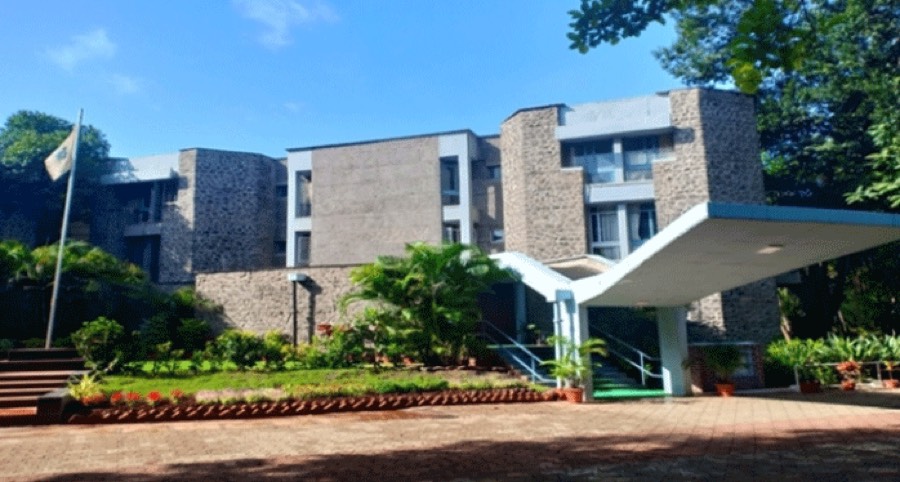

What NIBM is
The National Institute of Bank Management was established in 1969 by the Reserve Bank of India, as an autonomous apex institution for research, training and consultancy in banking and finance. Its Governing Board is chaired by the Governor of the Reserve Bank of India, and its members include the deputy governor, the chairman of the State Bank of India, the managing directors of Bank of Baroda, Canara Bank, Bank of India, Punjab National Bank and Axis Bank, the chairman of NABARD, and directors of the IIMs at Udaipur and Nagpur.
NIBM runs one full-time academic programme: the two-year Post Graduate Diploma in Management in Banking and Financial Services, PGDM (B&FS). It began as a one-year programme in 2003 and became the two-year AICTE-approved PGDM in 2013. It is accredited by the National Board of Accreditation, and the Association of Indian Universities has granted it equivalence with the MBA degree for a three-year period. NIBM describes itself as the first institute in India to offer a fully residential PGDM specialising in banking and finance. Alongside it run roughly 150 executive development programmes a year for serving bankers, plus research and consultancy for the RBI, NABARD and the public sector banks.
Scale is small and deliberate: 30 faculty members, 260 students across both years, and a teacher-student ratio of 1:9. The course carries 108.5 credits across six terms, with an eight-week summer internship and a three-month banking and finance project inside it.
On rankings, the Prospectus 2026-28 places NIBM in the 101-125 band of the National Institutional Ranking Framework for management, 49th in Fortune’s India B-School list and 35th in the India Institutional Ranking Framework. Its own news page carries a Fortune rank of 62 from an earlier list, so check which year a Fortune figure belongs to before quoting it.
Admission route
There is no state quota and no CAP round here. NIBM is a standalone autonomous institute, not a DTE Maharashtra affiliated college. Its Prospectus 2026-28 lists only CAT and GMAT as screening tests, so a MAH MBA-CET score does not get you in and admission does not run through the Maharashtra CAP process. You apply to NIBM directly, online.
For the 2026-28 batch the screening tests are CAT 2025, conducted by the IIMs, or GMAT. CAT is stated as the benchmark for screening, and the IIMs have no role in selection or in running the programme (2026-28). Eligibility is a bachelor's degree with at least 50% marks, or 45% for reserved categories; final-year students may apply and are admitted provisionally.
Shortlisted candidates attend an offline Oral Communication Test and Personal Interview at Bengaluru, Delhi, Kolkata, Lucknow, Mumbai or Pune. The final weights are published.
The entrance score is only 35% of the final decision, and your Class 10 and Class 12 marks carry 25%.
| Parameter | Weight (%) |
|---|---|
| CAT / GMAT score | 35 |
| Academic performance (average of SSC and HSC marks) | 25 |
| Personal Interview | 25 |
| Oral Communication Test | 10 |
| Extracurricular activities, sports, work experience | 5 |
Fee structure
The PGDM (B&FS) fee for the 2026-28 batch is ₹9,02,000 in Year 1 and ₹8,82,000 in Year 2 — ₹17,84,000 for the two-year programme. Hostel is inside every one of those figures, which is why this total is not comparable with a tuition-only fee anywhere else.
| Head | Year 1 | Year 2 | Two-year total |
|---|---|---|---|
| Academic fee | ₹7,68,000 | ₹7,68,000 | ₹15,36,000 |
| Hostel charges | ₹1,08,000 | ₹1,08,000 | ₹2,16,000 |
| Alumni fee | ₹6,000 | ₹6,000 | ₹12,000 |
| Refundable deposits (₹12,000 security + ₹8,000 mess) | ₹20,000 | Nil | ₹20,000 |
| Total | ₹9,02,000 | ₹8,82,000 | ₹17,84,000 |
NIBM bills each year in three terms and publishes only those six amounts, so the year columns and the total above are those amounts added up rather than figures NIBM itself prints (AY2026-28). The first instalment of Year 1 is the largest at ₹3,55,160, because the deposits fall due inside it. The ₹20,000 is returned at the end of the programme after April 2028, so the cost net of it is ₹17,64,000.
Mess charges are excluded from every figure above and NIBM publishes no rate for them — settle that before you accept a seat, because it is the one recurring cost here that has no number attached. The selected candidate must pay the first instalment within two weeks of the offer or the seat passes to the next person on the waiting list, and cancellation refunds follow AICTE norms.
Education loans are available from State Bank of India, Bank of Baroda, Canara Bank, Union Bank of India, Punjab National Bank and Bank of Maharashtra among others, on terms NIBM describes as preferential for its students. A full tuition-waiver scholarship exists for a limited number of economically and socially challenged candidates, per institute criteria.
Cutoffs
The OPEN cut-off for the 2026-28 batch was the 80th percentile in CAT or GMAT. The same bar applies to both tests — NIBM publishes one threshold per category and applies it to either scorecard.
| Category | 2026-28 cut-off applied | Prospectus indicative threshold |
|---|---|---|
| OPEN / General | 80 | 80 |
| NC-OBC | 70 | 70 |
| EWS | 70 | 70 |
| SC | 65 | 65 |
| ST | 50 | 55 |
| PwD | No row in the applied cut-off | 55 |
The two columns disagree in two places, and NIBM explains why: the prospectus table is stated to be indicative and for comparison only, and the real cut-off for each category is set every year once all applications are in. So the left column is what happened for 2026-28 and the right column is what to plan against — never the other way round.
Clearing the percentile only earns you the interview, and the funnel published for 2026-28 shows how much is decided after it.
| Stage, 2026-28 cycle | Candidates |
|---|---|
| Cleared the cut-off and were called for the Oral Communication Test and Personal Interview | 1,225 |
| Offered admission | 162 |
| Placed on the waiting list | 292 |
With the entrance score weighted at 35% and school academics at 25%, a candidate at the 82nd percentile with strong Class 10 and 12 marks can finish above someone at the 95th with weak school records. The interviews are held in person — no online option — at Bengaluru, Delhi, Kolkata, Lucknow, Mumbai or Pune, at the centre you pick when applying.
Dates for the cycle that has just run, as a guide to the next one: applications opened 27 November 2025 and closed 20 March 2026, interviews ran through April and May 2026, results followed in May or June, and classes began in July 2026.
Placements
The latest report NIBM publishes covers the 2024-26 batch, and it comes with a caveat printed on the page: the placement cycle is yet to end. Read it as an interim position, not a final one.
| Metric | 2024-26 batch (cycle not closed) | 2023-25 batch (completed) |
|---|---|---|
| Batch size | 130 | 131 |
| Students placed | 128 (98%) | 100% placed |
| Median package | ₹13.00 LPA | ₹15.00 LPA |
| Average package | ₹13.50 LPA | ₹14.10 LPA |
| Highest package | ₹18.00 LPA | ₹26.60 LPA |
| Lowest package | Not published | ₹10.00 LPA |
| Top 10% average | ₹17.27 LPA | ₹20.46 LPA |
| Top 25% average | ₹16.70 LPA | ₹18.78 LPA |
| Top 50% average | ₹15.71 LPA | ₹17.00 LPA |
| Top 75% average | ₹14.68 LPA | ₹15.53 LPA |
| Recruiters | 36+ | 40 |
| Pre-placement offers | 14 | 18 |
Every headline figure is lower than the year before it, and the highest package is down by a third. Some of that gap is the unfinished cycle and some of it may not be — there is no way to tell from an interim report, which is exactly why the completed 2023-25 column sits beside it rather than being replaced by it.
The two years also sit differently around their own middle. In 2023-25 the median was above the mean, ₹15.00 lakh against ₹14.10 lakh, which happens when a lower tail pulls the average down; in 2024-26 the normal order returns, ₹13.00 lakh against ₹13.50 lakh. Plan against the median either way.
Where the 2024-26 batch went, by financial industry segment: consulting 29%, Indian private banks 23%, foreign banks 13%, small finance banks 8%, NBFCs 8%, rating agencies 8%, IT services 6% and fintechs 6%. Roles cluster in credit risk, market risk, compliance, treasury, rating analysis, corporate and investment banking, product management and analytics.
| Domain | Average package, 2024-26 |
|---|---|
| Treasury | ₹16.75 LPA |
| Consulting | ₹14.36 LPA |
| Risk and compliance | ₹14.05 LPA |
| Credit | ₹13.19 LPA |
| Audit | ₹11.81 LPA |
| Analytics | ₹11.59 LPA |
| Other financial services | ₹11.44 LPA |
| Product management | ₹11.30 LPA |
Recruiters for 2024-26 include Axis Bank, Bajaj Finserv, Bank of America, Barclays, BNY, Capgemini, CareEdge, Equitas Small Finance Bank, EY, Federal Bank, Grant Thornton, HDFC Bank, Hinduja Leyland Finance, ICICI Bank, ICRA, Infosys, KPMG, Protiviti, PwC, SBI Payments, Shivalik Small Finance Bank, Standard Chartered, Tata Capital and Unity Small Finance Bank.
The summer internship is eight weeks, taken after the first three terms. For the 2024-26 batch, 34+ organisations offered roles in risk management, credit, compliance, treasury, analytics, strategy and investment banking, with stipends of ₹50,000 to ₹1,40,000 for the internship period — not per month. Students arrange their own accommodation for it.
Campus and hostel
The campus sits at Kondhwe Khurd in south-east Pune, spread over about 60 acres in what NIBM describes as a picturesque valley inside the city, with the railway station 9 km away and the airport 16 km. It is one campus, self-contained, with its own residential and educational facilities. The programme is fully residential and NIBM provides accommodation for the duration of the coursework.
Hostel is neither optional nor an extra bill here, because ₹1,08,000 a year already sits inside the published fee. Mess does not.
| Item | 2026-28 published figure |
|---|---|
| Hostel charges | ₹1,08,000 a year (₹36,000 a term), inside the programme fee |
| Security deposit (refundable) | ₹12,000 |
| Mess deposit (refundable) | ₹8,000 |
| Recurring mess charges | Not published — stated as excluded from the fee |
| Accommodation during the summer internship | Students arrange their own |
The mess gap is real and worth settling before you accept a seat. NIBM states that the fee does not include mess charges, and publishes no rate for them anywhere. Ask the PGDM office in writing.
What the campus carries: a library with 71,000+ books, 15,800+ bound volumes, 80+ journals, 26,000+ e-books and 10,000+ e-journals, subscribing to Ace Equity, CMIE, EBSCO, JSTOR, ProQuest, Scopus, Financial Times, Harvard Business School cases and LSEG Workspace terminals; a fully equipped finance lab and the NIBM-CCIL simulation trading lab; campus-wide 24x7 Wi-Fi and analytical software including SPSS, EViews, STATA, @Risk, MATLAB and NVivo; an in-house dispensary with a resident medical officer and a consultant doctor on call round the clock, backed by tie-ups with multi-speciality hospitals; a bank branch and a post office on campus; a gymnasium and courts for tennis, cricket, basketball, badminton and table tennis. Students are given a formal uniform for seminars, presentations and interviews. A laptop is compulsory and students are expected to have their own before classes start.
How NIBM compares
Compare NIBM on the axis that genuinely differs between these options: how narrow you want the degree to be.
Against SIBM Pune. SIBM Pune is the general-management alternative in the same city, with a broader functional spread and a far larger batch and alumni base. If you want marketing, operations and human resources still on the table after two years, that is the wider net. If you already know the answer is banking, NIBM goes deeper than any general programme's finance electives can.
Against IIM Nagpur. An IIM tag travels further outside financial services and carries more weight with generalist recruiters. NIBM's counter-argument is domain and governance: the RBI Governor chairs its board, and its executive training arm teaches serving bankers, which is why its placement mix clusters in banks, NBFCs, foreign banks and risk-consulting roles rather than spreading across all sectors.
Against NMIMS Mumbai. Location and scale favour NMIMS, since a Mumbai address puts students beside trading floors and bank head offices. NIBM's counter is focus and cost: a single-programme residential institute where the whole cohort is doing banking.
Against TAPMI Manipal. TAPMI is the other well-known BFSI-leaning option. Decide that one on curriculum depth and recruiter mix, and read both institutes' own placement reports side by side rather than any aggregator's summary table.
Contact & address
National Institute of Bank Management, NIBM Post Office, Kondhwe Khurd, Pune 411048, Maharashtra, India
Frequently asked questions
Which entrance exams does NIBM Pune accept for the PGDM (B&FS)?
For the 2026-28 batch NIBM screened applicants on CAT 2025 or GMAT only, with CAT stated as the benchmark for screening. Earlier cycles also accepted XAT and CMAT, so an older NIBM shortlist document is not a reliable guide. MAH MBA-CET is not listed, and there is no Maharashtra CAP route into NIBM.
Is work experience required to apply to NIBM Pune?
No. NIBM's published eligibility is a bachelor's degree with at least 50% marks, or 45% for reserved categories, and final-year students may apply provisionally. Work experience is not a gate, but it is scored: it sits inside the 5% weight covering extracurricular activities, sports and work experience in the published selection matrix.
What decides the shortlist and then the final selection at NIBM?
Two separate stages. A published CAT or GMAT percentile cut-off decides who is called for the offline Oral Communication Test and Personal Interview. The final ranking then applies published weights: entrance score 35%, academic performance from SSC and HSC 25%, personal interview 25%, oral communication test 10%, and extracurriculars, sports and work experience 5%.
Is the hostel compulsory at NIBM Pune, and is it inside the fee?
Yes on both counts. The PGDM (B&FS) is fully residential and hostel charges already sit inside the published fee at ₹36,000 per term, ₹1,08,000 a year, for the 2026-28 batch. A refundable ₹12,000 security deposit and ₹8,000 mess deposit apply. The recurring mess bill is separate and is not published on the fee page.
How do education loans and scholarships work at NIBM Pune?
NIBM's prospectus lists education loans available from State Bank of India, Bank of Baroda, Canara Bank, Union Bank of India, Punjab National Bank and Bank of Maharashtra, on terms it describes as preferential for NIBM students. A full tuition-waiver scholarship exists for a limited number of economically and socially challenged candidates, per institute criteria. Fee refunds on cancellation follow AICTE norms.
Which NIBM placement figure should I plan against?
Use the median, and use the cycle you are actually being recruited into. NIBM’s latest report covers the 2024-26 batch and carries a ₹13.00 lakh median against a ₹13.50 lakh average — the ordinary shape, where a few large offers pull the mean above the middle. The completed 2023-25 report was the other way round, a ₹15.00 lakh median against a ₹14.10 lakh average, which happens when a lower tail drags the mean down rather than a top tail lifting it. In that year the typical graduate did better than the average implied; in this one, slightly worse. Two things to hold on to. NIBM prints “Placement Cycle is yet to end” on the 2024-26 report, so its figures can still move. And every headline number in it sits below the year before — median, average, highest, recruiters and pre-placement offers alike — which is worth asking the PGDM office about directly rather than reading either year on its own.
📋 Data Accuracy Notice (September 2026)
- Primary evidence: No page-specific primary source is registered for this route yet; treat changing figures as pending until the issuing authority publishes them.
- Verification: Recheck live fees, cut-offs, dates, vacancies and refund rules on the competent authority or institute website before applying, locking choices or paying.
- Corrections: We keep unknown figures unfilled instead of replacing them with third-party estimates. Report an error to [email protected].
- Platform status: Future Career Guidance is an independent admission counselling service. Listing a college does not imply affiliation, authority to allot a seat or a placement guarantee.