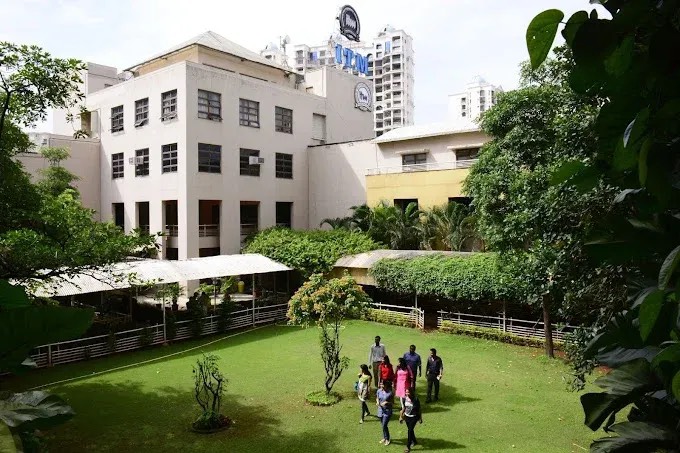

What ITM is
ITM Business School’s Kharghar campus belongs to the ITM Group of Institutions and has been open since 1991. For most of that period it ran a full-time, AICTE-approved PGDM, NBA-accredited and AIU-accredited for over 25 years.
The change that matters to anyone applying now happened in 2023. ITM Skills University was established — a UGC-recognised private skills university constituted under the Government of Maharashtra — and the flagship programme became MBA iConnect, with the degree awarded by that university. So you are applying for a two-year MBA degree from a university constituted in 2023, delivered on a campus with a much longer diploma history. Which of the two weighs more depends on where you are heading: some employers, and some universities assessing you later for further study, treat a degree and a diploma differently.
The MBA iConnect is two years, full-time, with ten specialisations — five mainstream (Marketing Management, International Business, Human Resource Management, Operations and Supply Chain Management, Finance) and five described as new-age (Financial Services, FinTech, Digital Marketing and Media Management, Business Analytics, Retail Management and E-Commerce). Each carries a selection from 35+ professional certifications at no extra cost, and those certifications are a compulsory part of the curriculum rather than an optional extra. The programme also includes 300+ hours of soft-skills training and an on-campus start-up incubator with a seed fund ITM states at ₹1 crore, which a student may work on instead of taking the five-month internship.
On size, ITM says two different things. Its own comparison table sets a batch of 60 students against a conventional MBA’s 100-plus; its admissions FAQ says each of the ten specialisations admits around 60. Those describe very different cohorts, so ask which applies to the specialisation you are applying for before reading anything into class size.
On rankings, ITM appears in the NIRF India Rankings 2024 list of participating management institutes but not in the published ranked list, and not in the NIRF 2025 Management top 100. The placements it does display come from magazine and survey lists — Business Today, The Week, India Today, IIRF, Fortune, EW India — and most carry a 2023 or 2024 date.
Admission route
Admission is run by the university itself, through what the official Admission Policy calls the ITMSU Centralized Selection Process. That policy does not describe a Maharashtra DTE or CET Cell CAP seat-allotment route for this MBA. A State CET score is accepted as a qualifying test, but the seat comes from ITM's own merit list. If a CAP-allotted seat is what you want, check the CET Cell institute list first.
Eligibility, per the official Admission Policy: a bachelor's degree (10+2+3) with a minimum of 50% marks or equivalent CGPA, and 45% for reserved-category candidates. Final-year students may apply.
Accepted entrance tests, as listed on ITM Business School's official MBA page: CAT, XAT, NMAT, CMAT, MAT, ATMA, CUET or a State CET. The Admission Policy also allows an entrance test conducted by the university itself in place of a national score.
The stages are: application and fee, document scrutiny, entrance test or accepted score, then Micro Presentation / Group Discussion / Case Study Analysis plus Personal Interview (ITM's public site calls this stage Case Analysis and Personal Interview, or CAPI), verification of Government of Maharashtra norms, and a composite merit list.
The Admission Policy states that each of the six merit parameters below carries equal weightage, so the entrance percentile is one-sixth of your case, not the whole of it.
| Merit parameter (ITMSU Admission Policy, Stage 9) | Weightage |
|---|---|
| Educational qualification | Equal share |
| Extra-curricular activities, achievements and awards | Equal share |
| Work experience (if any) | Equal share |
| Entrance test score | Equal share |
| Micro Presentation / Group Discussion / Case Study Analysis | Equal share |
| Personal Interview | Equal share |
Reservation follows Government of Maharashtra category percentages, with a further 15% supernumerary quota for foreign nationals, PIO and NRI candidates. The application fee is ₹1,500 and an admission offer must be confirmed within 15 days.
Fee structure
The MBA iConnect fee for the 2026-28 batch is ₹6,70,000 in Year 1 and ₹6,75,000 in Year 2 — ₹13,45,000 for the two-year degree. Year 1 is itself split in two, and the first part falls due before you have finished deciding.
| MBA iConnect (AY2026-28) | Year 1 | Year 2 | Two-year total |
|---|---|---|---|
| Programme fee — Part 1 | ₹25,000 | — | ₹25,000 |
| Programme fee — Part 2 | ₹6,45,000 | ₹6,75,000 | ₹13,20,000 |
| Fee payable | ₹6,70,000 | ₹6,75,000 | ₹13,45,000 |
The dates are fixed and worth putting in a calendar.
| Payment | Amount | When it falls due |
|---|---|---|
| Application fee | ₹1,500 | On applying online |
| Programme fee Part 1 | ₹25,000 | Immediately on the provisional offer letter |
| Programme fee Part 2 | ₹6,45,000 | Within 30 days of the confirmed offer letter |
| Year 2 fee | ₹6,75,000 | On or before 15 March 2027 |
| Late payment charge | ₹5,000 | On any payment made after its due date |
Part 1 is refundable subject to University and UGC terms. What the fee covers: prescribed educational resources, uniforms, co-curricular activities, the professional certifications and medical insurance. What it does not: hostel, mess, and a laptop with licensed software, which the schedule excludes explicitly (AY2026-28).
One specialisation costs more. MBA International Business carries the Global Immersion Programme as a compulsory component rather than an optional one, so its total sits above the ₹13,45,000 above. The immersion runs in the UAE (four days, hosted by the University of Dubai and Skyline University College, Sharjah), Singapore (seven days) and Europe (eight to ten weeks). Ask for the International Business figure and the immersion cost for your destination on the signed schedule before you commit — the fee link on ITM’s MBA page opens a contact form rather than the document, and a lender will want the same paper.
Scholarships run through the iSET test, open to candidates with at least 60% in class 10, class 12 and graduation. ITM awards 10 full tuition waivers, 15 at 50%, 30 at 25% and 100 at 10%, totalling ₹2 crore against roughly 2,000 candidates a year. They apply to the first year only, so budget Year 2 at the full ₹6,75,000 whatever you win.
Cutoffs
ITM publishes no percentile or score cutoff for its MBA. No minimum CAT, XAT, NMAT or CMAT percentile appears on the MBA page, in the admission policy or in the fee schedule. The one indicative figure ITM gives is in its own admissions FAQ: a percentile above 70 in exams such as CAT, XAT, CMAT and MAT increases your chances. Read that as guidance rather than a threshold — the same answer says the cutoff varies each year with the exam.
The absence is structural, not an oversight, and it should change how you prepare. ITM states that applicants are assessed on a combination of the academic record, entrance test scores, performance in the Case Analysis and Personal Interview, relevant work experience if any, and extra-curricular activities and personal achievements — and that no one factor is more important than another. It adds the sentence most candidates need to read twice: a high entrance test score does not guarantee a call for the selection process, let alone an admission offer.
| What the panel scores | Weight ITM states |
|---|---|
| Academic record | No one factor outweighs another |
| Entrance test score — iSET, or an accepted national or state test | No one factor outweighs another |
| Case Analysis and Personal Interview (CAPI) | No one factor outweighs another |
| Relevant work experience, if any | No one factor outweighs another |
| Extra-curricular activities and personal achievements | No one factor outweighs another |
The only hard numeric floor published is academic, not percentile: 50% in the bachelor’s degree. And because ITM accepts its own iSET in place of a national score, candidates enter the same list on different scales, which is part of why a single percentile bar would not mean much here.
Practically, the shortlist is rolling. ITM runs multiple selection rounds and says applying early raises your chances, because a later round competes for what is left rather than the full intake. Before paying the ₹25,000 Part 1 fee, ask the admissions office in writing for the round schedule, the seats still open in your specialisation, and the profile range admitted in the previous round. If they will not put it in writing, treat that itself as information.
Placements
This is where the official record is thinnest, so read it slowly. ITM publishes three headline numbers and attaches a graduating batch to none of them.
| What ITM reports | Figure | Batch it belongs to |
|---|---|---|
| Average CTC | ₹8,65,000 | Not published |
| Highest CTC | ₹21,00,000 | Not published |
| Median CTC | Not published | — |
| Companies recruiting on campus | 400+ a year | Stated as last year |
| Companies contacted a year | 2,000+ | Stated as annual |
| Placement rate | 100% on the programme page, 99% in the admissions FAQ | Not published |
Two of those rows deserve a second look. The placement rate is a “100% Placement Record” in one place on ITM’s site and 99% in another. And an ITM blog attributes the ₹8.65 lakh and ₹21 lakh pair to the 2024 batch while, in the same article, also stating an average of around ₹7.5 lakh against a highest of ₹14 lakh. Two placement rates and two sets of averages is a reason to ask for the underlying batch data, not a reason to split the difference.
No median is published anywhere and no audited placement report is downloadable. The median matters more than the average here: an average is lifted by a handful of large offers in a small batch, while the median tells you what the middle student actually signed. On a fee of ₹13,45,000 plus hostel, that gap decides whether a loan repayment is comfortable.
Named offers on the placement page run ₹21 lakh, ₹21 lakh, ₹15 lakh, ₹15 lakh, ₹13 lakh, ₹13 lakh and ₹8.85 lakh. Recruiters ITM names include Deloitte, PwC and ICICI. The placement cell is 14 people supported by student representatives, and the sector spread is described as covering consulting, investment banking, FMCG, supply chain and manufacturing among others.
The internship record is firmer than the placement record, and it comes with figures attached.
| Internship | What ITM reports |
|---|---|
| Industry internship | Five months, paid, compulsory |
| NGO internship | Two weeks, compulsory |
| Companies taking interns | Over 200 this year |
| Highest stipend | ₹45,000 a month on the MBA page; ₹40,000 a month on the placement page |
| Average stipend | ₹15,000 a month |
A student may work on a start-up idea in the on-campus incubator instead of taking the five-month internship.
Campus and hostel
ITM Business School is one campus: Plot 25 & 26, Institutional Area, Sector 4, Kharghar, Navi Mumbai 410210, described by ITM as its flagship campus. The wider ITM Group runs other institutes — design and media, health sciences, hotel management, an executive education centre and a skills academy — but those are separate institutes, not other campuses of this business school. Kharghar sits on the Harbour line and inside the Navi Mumbai corporate belt, which is what makes a five-month internship logistically workable from here.
Hostel is optional and charged separately from the programme fee, and mess is separate again.
| Accommodation and food (AY2026-28) | What ITM charges |
|---|---|
| Hostel, per year | ₹1,00,000 to ₹1,50,000 |
| Mess | Billed on actuals, paid directly to the vendor on joining the hostel |
| Meal plans | Short-term and annual plans available separately |
| Room | Furnished, twin-sharing; male and female students in separate wings |
| Distance from campus | Under a kilometre, with a bus service between the two |
| Off-campus option | Student accommodation available in the vicinity |
The hostel provides housekeeping, a cafeteria, water coolers, electronic security, power backup and high-speed wireless internet, with 24-hour security and a professional warden trained to handle emergencies; on-call physicians are available. Recreation runs to a yoga hall, an indoor games arena with table tennis, carrom, chess and a pool table, a study hall and a gymnasium.
The academic campus is air-conditioned and Wi-Fi enabled, with interactive classrooms, video-conferencing facilities, an auditorium, specialised labs, an amphitheatre, green open spaces and digital libraries.
Two budgeting cautions. Mess on actuals is a real cost that nobody has quoted you yet, so ask the hostel office for the current monthly rate before you sign anything. And do not simply double the annual hostel figure for a two-year total — the second year is charged at the rate published then, not at this one.
How ITM compares
Compare on the axis that will decide your outcome, not on a composite rank.
SIES College of Management Studies, Nerul is the closest comparison on the admission-route axis. A Mumbai University MMS seat routed through the Maharashtra CAP, with state fee regulation attached, is a structurally different product from an institute-run selection process. Confirm current CAP participation on the CET Cell institute list.
Welingkar Institute of Management, Mumbai is the comparison on the qualification axis: an autonomous, AICTE-approved PGDM against an MBA degree from a university constituted in 2023. Some employers, and some universities assessing you later for further study, treat a degree and a diploma differently. Ask what your target sector prefers.
K J Somaiya Institute of Management, Mumbai is the comparison on disclosure. A longer placement record with more granular published data gives you something firmer to underwrite a loan against.
NMIMS Mumbai is the comparison on cost versus control. The fee is higher, but NMAT performance genuinely dominates the call, so a strong test score converts directly. If yours is strong, running that route in parallel costs only an application fee.
Our editorial read: ITM Navi Mumbai deserves a shortlist slot if the Navi Mumbai location, the ten-specialisation choice and a 60-seat cohort suit you, and if the placement office will give you batch-wise data in writing. On published evidence alone it is hard to justify against peers that disclose more.
Contact & address
ITM Business School, Plot 25 & 26, Institutional Area, Sector 4, Kharghar, Navi Mumbai, Maharashtra 410210
Frequently asked questions
Which entrance exams does ITM Navi Mumbai accept for the MBA?
ITM accepts CAT, XAT, NMAT, CMAT, MAT, ATMA, CUET and State CET scores. The ITM Skills University Admission Policy additionally allows an entrance test conducted by the university itself in place of a national score. No minimum percentile is published for any of these tests, so a valid scorecard makes you eligible rather than shortlisted.
Do I need work experience to apply to the ITM Navi Mumbai MBA?
No. The official Admission Policy sets no work-experience requirement for the regular two-year MBA. It requires two years of post-graduation experience and current employment only for the Executive MBA. Work experience is one of six equally weighted merit parameters, so it strengthens your composite score without being a gate. Freshers and final-year students may apply.
How is the ITM Navi Mumbai shortlist actually decided?
The Admission Policy builds a composite merit list from six parameters carrying equal weightage: educational qualification, extra-curricular achievements and awards, work experience if any, entrance test score, the Micro Presentation, Group Discussion or Case Study Analysis round, and the Personal Interview. Offers follow rank order on that list, and seats left vacant roll into the next selection round.
Is hostel accommodation guaranteed at ITM Navi Mumbai, and what does it cost?
No. The official fee schedule states that hostel allocation is first-come, first-served because seats are limited, and advises paying the full hostel fee early to reserve one. Accommodation is optional, valid for 11 months and renewable in year two. The 2025-27 schedule lists ₹1,20,000 per year for a non-AC room and ₹1,45,000 with air conditioning. Mess is billed separately on actuals.
How do scholarships and education loans work at ITM Navi Mumbai?
ITM's scholarship page describes tuition-fee scholarships awarded through its iSET scholarship test, requiring a minimum 60% in class 10, class 12 and graduation, and states that scholarships awarded apply to the first year only. For financing, ITM's official fee schedule names education-loan partners including SBI, ICICI Bank, Axis Bank, IDFC First Bank, HDFC Credila and Bank of Baroda.
Which ITM fee figure should I actually budget against?
₹13,45,000 for the 2026-28 batch — ₹6,70,000 in Year 1 and ₹6,75,000 in Year 2 — unless you are taking MBA International Business, where the compulsory Global Immersion Programme puts the total higher and the figure should come to you on the signed schedule. On top of whichever applies: a ₹1,500 application fee, hostel at ₹1,00,000 to ₹1,50,000 a year, mess billed on actuals, and a laptop, which the schedule excludes explicitly. Two practical cautions. ₹25,000 of Year 1 is Part 1, due immediately on the provisional offer letter, so it falls due before you have finished deciding; Part 2 follows within 30 days of the confirmed offer, and Year 2 is due on or before 15 March 2027. And the fee link on ITM’s own MBA page opens a contact form rather than the document, so ask the admissions office for the signed schedule and its due dates in writing before you pay anything. A lender will want the same paper.
📋 Data Accuracy Notice (September 2026)
- Primary evidence: No page-specific primary source is registered for this route yet; treat changing figures as pending until the issuing authority publishes them.
- Verification: Recheck live fees, cut-offs, dates, vacancies and refund rules on the competent authority or institute website before applying, locking choices or paying.
- Corrections: We keep unknown figures unfilled instead of replacing them with third-party estimates. Report an error to [email protected].
- Platform status: Future Career Guidance is an independent admission counselling service. Listing a college does not imply affiliation, authority to allot a seat or a placement guarantee.