COEP fees 2026-27 by admission category
First-year fees payable at admission range from ₹11,760 for SC/ST/PWD to ₹1,95,790 for the All-India JEE quota — which pays more than Open, not less.
COEP publishes a single first-year fee circular covering every admission category, signed by the Registrar. The figures below are that table as printed. Each column total is the sum of its own five heads, and every one reconciles against the total the document itself states.
| Admission category | Tuition | Development | Other | Exam | Misc. | Total payable |
|---|---|---|---|---|---|---|
| CAP — All India Quota (JEE) | ₹87,000 | ₹49,000 | ₹48,030 | ₹5,000 | ₹6,760 | ₹1,95,790 |
| CAP — Open | ₹87,000 | ₹25,000 | ₹48,030 | ₹5,000 | ₹6,760 | ₹1,71,790 |
| CAP — J&K Migrant / NE | ₹87,000 | ₹25,000 | ₹48,030 | ₹5,000 | ₹6,760 | ₹1,71,790 |
| CAP — EWS / EBC / SEBC with valid certificate (income below ₹8 lakh) | ₹43,500 | ₹25,000 | ₹48,030 | ₹5,000 | ₹6,760 | ₹1,28,290 |
| CAP — VJ/NT/SBC/OBC with valid NCL (income below ₹8 lakh) | reimbursed * | ₹25,000 | ₹48,030 | ₹5,000 | ₹6,760 | ₹84,790 |
| CAP — TFWS | reimbursed * | ₹25,000 | ₹48,030 | ₹5,000 | ₹6,760 | ₹84,790 |
| CAP — Girls, Open/OBC/SBC/EWS/SEBC (income below ₹8 lakh) | reimbursed * | ₹25,000 | ₹48,030 | ₹5,000 | ₹6,760 | ₹84,790 |
| CAP — SC / ST / PWD | reimbursed * | reimbursed * | reimbursed * | ₹5,000 | ₹6,760 | ₹11,760 |
| CAP — PMSSS | reimbursed * | reimbursed * | reimbursed * | ₹5,000 | ₹6,760 | ₹11,760 |
| ACAP — SC / ST / PWD | reimbursed * | reimbursed * | reimbursed * | ₹5,000 | ₹6,760 | ₹11,760 |
| ACAP — VJ/NT/SBC/OBC | ₹87,000 | ₹25,000 | ₹48,030 | ₹5,000 | ₹6,760 | ₹1,71,790 |
| ACAP — EWS / EBC / SEBC | ₹87,000 | ₹25,000 | ₹48,030 | ₹5,000 | ₹6,760 | ₹1,71,790 |
| ACAP — All Girls (except SC/ST) | ₹87,000 | ₹25,000 | ₹48,030 | ₹5,000 | ₹6,760 | ₹1,71,790 |
The All-India quota pays the most, not the least. A candidate admitted through the All-India JEE quota pays ₹1,95,790 against ₹1,71,790 for a CAP Open candidate — ₹24,000 more, entirely because the Development Fee is ₹49,000 for that column instead of ₹25,000. Everything else is identical. This is the opposite of what most applicants assume, and it is worth building into the budget before you rank an All-India seat.
The girls' concession is the largest single reduction in the table. A girl candidate in the Open, OBC, SBC, EWS or SEBC categories with family income below ₹8 lakh pays ₹84,790 rather than ₹1,71,790 — the tuition head is reimbursed in full, cutting the first-year outlay by roughly half. SC, ST and PWD candidates pay ₹11,760, being exam and miscellaneous heads only.
The trap is the ACAP round. Read the bottom four rows against their CAP equivalents. A VJ/NT/SBC/OBC candidate pays ₹84,790 through CAP but ₹1,71,790 through ACAP — the same category, the same institute, ₹87,000 more, because the tuition waiver does not carry into the ACAP round. The same applies to EWS/EBC/SEBC and to girls. If you are weighing a CAP seat against an ACAP seat, the fee difference belongs in that decision.
An asterisk is a reimbursement, not a discount. COEP's note is explicit: for SC, ST, PWD, VJ/NT, OBC, SBC, EWS, SEBC and PMSSS candidates the starred heads are reimbursed by the State or Central Government as freeship or scholarship, and the student must apply on the MAHADBT portal within the stipulated period. The circular states plainly that if the student does not apply, they must pay the full fees applicable to an Open-category student — and that if the Government does not reimburse for any reason, the difference becomes payable within three weeks of that information appearing on MAHADBT. Treat the concession as conditional on a deadline you personally have to meet.
COEP's own note adds that this structure applies to students newly admitted for AY 2026-27 and may change from time to time under State Government and university guidelines. The university lists 020-25507056 as the scholarship section contact for freeship and scholarship deadlines.
COEP admission routes and seat pools
COEP fills every B.Tech seat through CAP: the official seat matrix records zero institute-level seats in all nine branches.
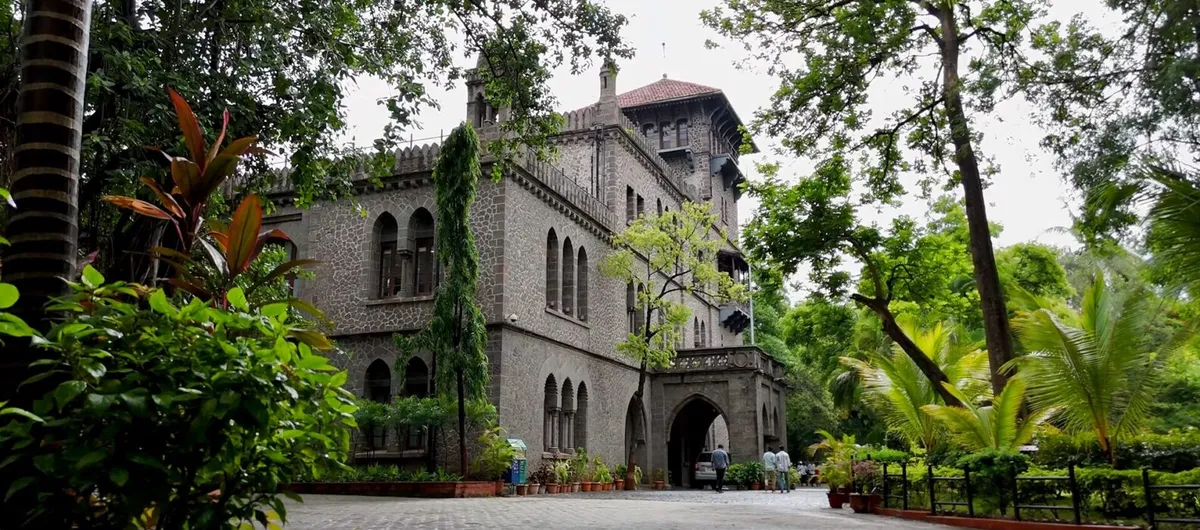
COEP Technological University is listed by the Maharashtra State Common Entrance Test Cell under institute code 16006, with its status printed on the official cut-off list as University Autonomous and Home University shown as "Autonomous Institute". That status has a direct counselling consequence: COEP's closing scores appear under State Level rows only, so there is no Home University versus Other-Than-Home split to compare against.
| Route | Selection basis | What to verify |
|---|---|---|
| Maharashtra State CAP | MHT-CET merit through the State CET Cell | Category, seat type, branch choice code, round and reporting deadline |
| All-India CAP | JEE Main merit through the State CET Cell | All-India merit number, programme choice code and round |
| Institute level / management quota | Does not exist at COEP | The 2025-26 seat matrix records institute seats as 0 for every branch |
This is the single most useful fact about COEP admission. Across all nine branches the official seat matrix records zero institute-level seats: 240 Maharashtra plus 60 All-India in Computer Science and Engineering, 120 plus 30 in each of Civil, Electrical, Electronics & Telecommunication and Mechanical, and so on down the list — with nothing in the institute column. Every seat is allotted on CAP merit.
So if anyone offers a "COEP management quota seat", a "direct admission" or an "institutional seat", there is no such seat pool to offer. The only route is the CET Cell option form, on merit, in a published round. We can help you read the routes, order preferences and prepare documents — nobody can allot a COEP seat outside CAP.
Seats and intake by branch
COEP sanctions 1,185 B.Tech seats across nine branches, split 80% Maharashtra and 20% All-India, with no institute-level pool.
The table below is the 2025-26 State CET Cell seat matrix for institute 16006, reproduced as published. Note the consistent 80/20 split between Maharashtra and All-India seats, and the zero institute column across every row.
| Branch | Choice code | Sanctioned | Maharashtra | All India | Institute |
|---|---|---|---|---|---|
| Computer Science and Engineering | 1600624210 | 300 | 240 | 60 | 0 |
| Civil Engineering | 1600619110 | 150 | 120 | 30 | 0 |
| Electrical Engineering | 1600629310 | 150 | 120 | 30 | 0 |
| Electronics and Telecommunication Engg | 1600637210 | 150 | 120 | 30 | 0 |
| Mechanical Engineering | 1600661210 | 150 | 120 | 30 | 0 |
| Manufacturing Science and Engineering | 1600662710 | 75 | 60 | 15 | 0 |
| Metallurgy and Material Technology | 1600669410 | 75 | 60 | 15 | 0 |
| Artificial Intelligence and Machine Learning | 1600692110 | 75 | 60 | 15 | 0 |
| Instrumentation and Control Engineering | 1600646410 | 60 | 48 | 12 | 0 |
| Total | — | 1,185 | 948 | 237 | 0 |
What the intake shape tells you. Computer Science and Engineering alone carries 300 of the 1,185 seats — roughly a quarter of the institute — while Instrumentation and Control has 60. That matters when you read cutoffs: a branch with 300 seats reaches further down the merit list than a branch with 60, so a large intake and a high closing percentile together mean genuinely heavy demand rather than simple scarcity.
The three smallest branches — Manufacturing Science, Metallurgy and AI & Machine Learning at 75 seats each — behave very differently from one another in the cutoff table below, which is the clearest evidence that seat count alone does not set the bar.
These are 2025-26 figures. The 2026-27 seat matrix is published by the CET Cell each cycle and can change; confirm the current matrix before you fill the option form.
CAP Round I cutoffs (2025)
On CAP Round I 2025 State-Level Open, COEP closed from 99.8985029 in Computer Science and Engineering down to 98.4056300 in Metallurgy.
| Branch | 2025 (AY 2025-26) | 2024 (AY 2024-25) | 2023 (AY 2023-24) |
|---|---|---|---|
| Computer Science and Engineering | 243 | 96 | 151 (listed as Computer Engineering) |
| Electronics and Telecommunication Engg | 736 | 635 | 346 |
| Electrical Engineering | 1,481 | 1,341 | 1,044 |
| Mechanical Engineering | 1,756 | 2,109 | 1,983 |
| Instrumentation and Control Engineering | 1,814 | 1,521 | 1,775 |
| Manufacturing Science and Engineering | 3,105 | 3,877 | 4,729 |
| Civil Engineering | 4,694 | 4,466 | 4,676 |
| Metallurgy and Material Technology | 5,522 | 6,313 | 6,691 |
| Artificial Intelligence and Machine Learning (code …92110) | 352 | not listed | not listed |
| Robotics and Artificial Intelligence (code …26610) | not listed | 476 | 797 |
Why merit numbers and not percentiles here. CAP allots against the state general merit number, and it is the value that can be read unambiguously from all three documents. A lower number is a harder seat.
Two branch changes you must not read across. In 2023 COEP's computing seat was listed as Computer Engineering under choice code ending 24510; from 2024 it appears as Computer Science and Engineering under code ending 24210. Those are different CET Cell course codes, so the 2023 figure describes a differently-coded seat and the three years are not a clean like-for-like series. Separately, Robotics and Artificial Intelligence (code ending 26610) ran in 2023 and 2024 but is absent in 2025, while AI & Machine Learning (code ending 92110) appears only in 2025. They carry different codes, so we show them as separate rows rather than implying one became the other.
What the three years show where the series is clean. The two hardest engineering branches moved in opposite directions to the easiest ones. Computer Science closed at merit 96 in 2024 and 243 in 2025, so the seat got materially easier to reach in the most recent round. Electronics & Telecommunication moved the other way across the full period, from 346 to 736 — roughly twice as far down the merit list. Meanwhile the branches at the back of the list eased consistently: Manufacturing Science went 4,729 → 3,877 → 3,105 and Metallurgy 6,691 → 6,313 → 5,522, both tightening year on year. Civil sat almost still across all three, between 4,466 and 4,694.
None of this predicts 2026. Closing merit numbers move with the applicant pool, the seat matrix and how candidates order preferences in that cycle. Three years is a short series, and one of its rows changes course code partway through. These are Round I values only; later rounds close at different points, and a branch that looks out of reach in Round I can move.
COEP placements: branch-wise median and average salary
COEP publishes a branch-wise median, which most colleges do not: for AY 2025-26 the institute median was ₹10.50 LPA against an average of ₹12.50 LPA, and CSE closed at a ₹16.15 LPA median.
COEP's Training and Placement Cell publishes something unusual and genuinely useful: a median salary per branch, alongside the average. Most institutes publish only the average, which a handful of large offers can pull upward. Where the two differ, the median is the better guide to what a typical graduate of that branch actually received.
| Branch | Registered | Total placed | % placed | Median (LPA) | Average (LPA) | Maximum (LPA) |
|---|---|---|---|---|---|---|
| Computer Science and Engineering | 185 | 168 | 90.81 | 16.15 | 17.95 | 60.30 (DE Shaw) |
| Electronics & Telecommunication | 86 | 61 | 70.93 | 12.00 | 14.31 | 40.07 (Texas Instruments) |
| Instrumentation and Control | 35 | 34 | 97.14 | 9.00 | 11.49 | 38.25 (Texas Instruments) |
| Manufacturing Science | 67 | 56 | 83.58 | 10.00 | 10.21 | 18.00 (Havelock One) |
| Planning | 9 | 6 | 66.67 | 6.38 | 10.10 | 18.00 (Havelock One) |
| Civil Engineering | 43 | 28 | 65.12 | 8.50 | 10.04 | 20.88 (Bharat Petroleum) |
| Mechanical Engineering | 147 | 135 | 91.84 | 9.00 | 9.92 | 23.50 (Meesho) |
| Electrical Engineering | 75 | 74 | 98.67 | 8.50 | 9.23 | 14.15 (ZS Associates) |
| Metallurgy and Material Technology | 55 | 52 | 94.55 | 6.50 | 8.37 | 22.00 (DMW Corporation) |
| All branches | 702 | 614 | 87.46 | 10.50 | 12.50 | — |
Read the median column first. For the institute as a whole the median is ₹10.50 LPA against an average of ₹12.50 LPA — a ₹2 lakh gap that tells you the average is being lifted by a smaller number of high offers. The gap is widest in Instrumentation and Control (₹9.00 median against ₹11.49 average) and in Planning (₹6.38 against ₹10.10), where a single large offer moves the average a long way on a small cohort. In Manufacturing Science the two are almost identical (₹10.00 and ₹10.21), which indicates a tightly clustered outcome.
Placement rate and salary are not the same signal. Electrical Engineering placed 98.67% of registered students — the highest rate at COEP — on a median of ₹8.50 LPA. Computer Science placed 90.81% on a median of ₹16.15 LPA. A high placement percentage tells you how many found a role; the median tells you what that role paid. Metallurgy shows the same pattern from the other side: 94.55% placed, on the lowest median at COEP of ₹6.50 LPA.
Core versus non-core matters here. The same report splits placements into core and non-core roles. Computer Science placed all 168 of its students in core roles. Electronics & Telecommunication placed 37 in core and 24 in non-core, so roughly two in five placed E&TC students took a role outside their discipline. Mechanical placed 129 core against 6 non-core. If working in your own branch matters to you, that split is worth as much attention as the salary.
| Branch | Enrolled | Placed | % placed |
|---|---|---|---|
| Electrical Engineering | 67 | 67 | 100.00 |
| Computer Engineering | 159 | 146 | 91.82 |
| Instrumentation and Control | 30 | 27 | 90.00 |
| Manufacturing Science | 54 | 46 | 85.19 |
| Mechanical Engineering | 124 | 105 | 84.68 |
| Electronics & Telecommunication | 73 | 60 | 82.19 |
| Metallurgy and Material Technology | 52 | 35 | 67.31 |
| Civil Engineering | 65 | 40 | 61.54 |
| Planning | 6 | 2 | 33.33 |
| Total undergraduate | 630 | 528 | 83.81 |
One reconciliation note, stated rather than hidden. COEP's own placement page also carries a three-year summary showing 631 students enrolled and 534 placed (85%) for 2024-25 with 248 companies, while the detailed sheet above records 630 enrolled, 528 placed (83.81%) and 245 companies as at 28 August 2025. The difference is a snapshot-date effect — the detailed sheet was frozen in August 2025 and the summary was updated later. We publish the detailed sheet because it is dated and branch-wise, and flag the summary rather than silently choosing whichever number reads better.
Note also that the 2025-26 table counts registered students and the 2024-25 table counts enrolled students. Those denominators are not the same thing, so the two years' percentages should not be subtracted from one another to claim a trend.
CAP rounds, freeze and float: where the seat is actually lost
If CAP allots your first preference the seat is auto-freezed and you are out of later rounds — the same rule that applies at every CAP institute.
COEP admits entirely through CAP, so the State CET Cell's round mechanics decide the outcome as much as your score does. These rules are published in the Information Brochure for Academic Year 2026-27 dated 2 July 2026 and apply to every participating institute.
| What CAP allots you | What happens automatically | Still eligible for later rounds? |
|---|---|---|
| Your first preference | Allotment is auto-freezed; you must accept, report to the ARC or self-scrutinise your uploaded documents, and pay the seat acceptance fee online. | No — this allotment is final. |
| Not your first preference, and you are satisfied | You may freeze through your login, then report or self-scrutinise and pay the acceptance fee. | No — freezing makes it final. |
| Not your first preference, accepted without freezing | You confirm acceptance and hold the seat. | Yes — eligible for betterment in later rounds while holding it. |
| Not your first preference, not accepted | The seat is not confirmed to you. | Yes — but you hold nothing meanwhile. |
| Any allotment where you miss reporting or self-scrutiny | Your claim stands forfeited automatically and the seat is released. | No, in the auto-freeze and freeze cases. |
What this means for a COEP preference list. Putting COEP Computer Science and Engineering at preference 1 is a decision, not an aspiration: if it is allotted, the seat auto-freezes and your counselling ends there. Given COEP CSE closed at merit 243, most candidates listing it first will not be allotted it — but the ones who are should be certain they want it, because Round II will not be available to them.
The quieter risk is forfeiture, which needs no decision from you at all. Missing the ARC reporting window or failing to complete self-scrutiny releases the seat by default. Diarise the reporting deadline the day the allotment is published.
Common mistakes that cost COEP applicants a seat
The most expensive COEP mistakes are believing a management quota exists, and comparing COEP’s State Level row against another college’s Home University row.
COEP's admission process is unusually simple — one route, published merit — which is precisely why the errors below are so costly. Each row names the confusion and the official reference that settles it.
| The mistake | Why it misleads | What to read instead |
|---|---|---|
| Looking for a COEP management or institute quota | The 2025-26 seat matrix records institute seats as 0 in all nine branches. There is no such pool, so any offer of one is not an offer of a COEP seat. | The seat matrix table above, institute column |
| Comparing COEP's row with another college's Home University row | COEP is University Autonomous, so its cutoffs are published under State Level (GOPENS) only. A non-autonomous college's GOPENH row is a different seat pool. | The State Level row for COEP; the matching pool for any college compared |
| Assuming every COEP branch is near-unreachable | Closing merit numbers within COEP ranged from 243 in CSE to 5,522 in Metallurgy in Round I 2025 — a spread of over 5,000 ranks. | The full nine-branch cutoff table, not just the CSE row |
| Reading a percentile where the allotment uses a merit number | CAP allots against the state general merit number. The percentile is a derived label on the same row. | The closing merit number column |
| Treating Round I closing values as a 2026 threshold | Round I is one round of one cycle; later rounds close elsewhere and each year moves with the applicant pool and seat matrix. | The current year's CET Cell cut-off list once published |
| Listing only COEP branches on the option form | All nine are in one institute, so a heavy year moves them together and leaves no fallback. | A preference list with institutes at genuinely lower closing merit numbers |
None of these is a scoring problem, which is why they are worth checking twice. A valid merit number still loses the seat if the option form is filled against the wrong row, and no counselling service — including ours — can reopen a round once it closes.
How COEP compares with PICT and VJTI
On the same CAP Round I 2025 list, the computing seat closed at merit 103 for VJTI, 243 for COEP and 791 for PICT.
The three institutes Maharashtra candidates weigh against each other are COEP, VJTI Mumbai and PICT Pune. All three appear on the same State CET Cell cut-off list for CAP Round I 2025, which makes a like-for-like comparison possible without relying on anyone's marketing.
| Decision axis | COEP Technological University | VJTI Mumbai | PICT Pune |
|---|---|---|---|
| CET Cell institute code | 16006 | 03012 | 06271 |
| Status as printed on the cut-off list | University Autonomous | Government-Aided Autonomous | Un-Aided Autonomous |
| Computing branch | Computer Science and Engineering | Computer Engineering | Computer Engineering |
| Closing merit number, State-Level Open | 243 | 103 | 791 |
| Closing percentile, State-Level Open | 99.8985029 | 99.9522882 | 99.7116474 |
| Institute-level / management seats | 0 | See VJTI seat matrix | 117 other-than-NRI plus 39 NRI |
| Branch breadth | Nine branches including civil, mechanical and metallurgy | Full-spectrum including civil | Five, all computing and electronics |
| City | Pune | Matunga, Mumbai | Dhankawadi, Pune |
What the merit numbers say. For the computing seat in that round, VJTI closed hardest at merit 103, COEP next at 243, and PICT at 791. The ordering is consistent on percentile too. A candidate around merit 500 was out of range for both VJTI and COEP computing that year, but within range at PICT — which is a real, checkable planning fact rather than a ranking opinion.
Where the axes genuinely diverge. The status line drives cost: COEP is a state university, VJTI is government-aided, PICT is un-aided. We are deliberately not printing a fee comparison, because PICT's fees have been verified against its own fee page and COEP's and VJTI's have not — an unverified cost comparison is worse than none. The second divergence is breadth: COEP spans nine branches including civil, mechanical and metallurgy, while PICT is computing and electronics only. If a core branch is a real possibility for you, COEP and VJTI can serve it and PICT cannot.
The third is structural: COEP has no institute-level pool at all, so CAP merit is the only way in. PICT publishes institute-level and NRI seats alongside CAP. That changes what a fallback plan can look like at each institute.
Documents checklist (CAP reporting)
Missing a single original can cost the seat at reporting. The definitive list each cycle is the annexure of the State CET Cell's own Information Brochure — confirm there before you travel. The standard set:
- MHT-CET / JEE Main scorecard (whichever route you are admitted through)
- SSC (10th) and HSC (12th) marksheets — originals plus photocopies
- School / College Leaving Certificate
- Maharashtra Domicile Certificate (for state-quota seats)
- Nationality Certificate, or valid Indian passport, or birth certificate stating nationality
- Aadhaar card
- Caste Certificate + Caste Validity Certificate (reserved categories)
- Non-Creamy Layer Certificate valid for the current financial year (OBC / SBC / VJNT)
- EWS Eligibility Certificate (if claiming the EWS quota)
- Income Certificate (needed for TFWS and most scholarships)
- Gap Certificate (if there is a gap year after HSC)
- CAP allotment letter and seat-acceptance receipt (at reporting)
- Passport-size photographs
Frequently asked questions
Does COEP have a management quota or direct admission?
No. The State CET Cell seat matrix for 2025-26 records institute-level seats as 0 for all nine COEP B.Tech branches. Every seat is filled through the Centralized Admission Process on published merit — 948 Maharashtra seats and 237 All-India seats out of a sanctioned 1,185. If anyone offers a COEP management-quota or direct-admission seat, there is no such seat pool for them to allot.
What was the COEP CSE cutoff in 2025?
On CAP Round I 2025, COEP Computer Science and Engineering closed at Maharashtra State general merit number 243, which the CET Cell lists at merit percentile 99.8985029, in the State Level Open (GOPENS) pool. The merit number is the more useful target of the two, because CAP allots against it. This is a Round I value for one cycle and is not a 2026 threshold.
Is COEP a government college?
COEP Technological University is a state public university. The State CET Cell prints its status on the official cut-off list as "University Autonomous", distinct from VJTI Mumbai which is printed as "Government-Aided Autonomous" and PICT Pune as "Un-Aided Autonomous". One practical consequence is that COEP’s CAP cutoffs appear under State Level rows only, with no Home University split.
Which is the easiest branch to get into at COEP?
On CAP Round I 2025 State-Level Open, the two most reachable branches were Metallurgy and Material Technology at merit number 5,522 (98.4056300 percentile) and Civil Engineering at 4,694 (98.6211176). That is more than 5,000 merit ranks below Computer Science and Engineering at 243, so a candidate out of range for CSE may still be comfortably placed for other COEP branches.
How many seats does COEP have?
The 2025-26 seat matrix shows 1,185 sanctioned B.Tech seats across nine branches: 300 in Computer Science and Engineering, 150 each in Civil, Electrical, Electronics & Telecommunication and Mechanical, 75 each in Manufacturing Science, Metallurgy and AI & Machine Learning, and 60 in Instrumentation and Control. These split 948 Maharashtra and 237 All-India, with no institute-level seats.
Does COEP offer Artificial Intelligence and Machine Learning?
Yes. AI & Machine Learning is listed under choice code 1600692110 with a sanctioned intake of 75 seats — 60 Maharashtra and 15 All-India. It is also COEP’s second-hardest branch on the CAP Round I 2025 list, closing at merit number 352 and percentile 99.8616482, just behind Computer Science and Engineering.
What are the COEP fees for B.Tech?
First-year fees payable at admission for AY 2026-27 are ₹1,71,790 for CAP Open and ₹1,95,790 for the All-India JEE quota — the All-India column costs more because its Development Fee is ₹49,000 against ₹25,000 for Open. EWS pays ₹1,28,290; SC, ST and PWD pay ₹11,760; and girls in the Open, OBC, SBC, EWS or SEBC categories with family income below ₹8 lakh pay ₹84,790, since their tuition is reimbursed. These reserved-category reimbursements require applying on the MAHADBT portal and do not carry into the ACAP round. Years two to four have a separate fee circular that has not yet been read and are not stated here.
What is COEP’s CET Cell institute code?
COEP Technological University is institute code 16006 in the Maharashtra State CET Cell system. The code identifies the institute, not the programme — each branch has its own ten-digit choice code, such as 1600624210 for Computer Science and Engineering and 1600692110 for AI & Machine Learning. Verify both the institute code and the full branch choice code before submitting the option form.
Extended admission FAQs
Is COEP AI & Machine Learning harder to get into than Computer Science and Engineering?
Not quite — Computer Science and Engineering remains the harder of the two. On CAP Round I 2025 State-Level Open, CSE closed at merit number 243 (99.8985029 percentile) and AI & Machine Learning at 352 (99.8616482). They are close, and AI & ML is well clear of every other COEP branch, with the third-hardest — Electronics & Telecommunication — closing at 736. Note also that AI & ML carries 75 sanctioned seats against 300 for CSE, so the two are not comparable on scale.
How many All-India seats does COEP have, and who are they for?
The 2025-26 seat matrix shows 237 All-India seats out of 1,185 sanctioned, roughly 20% of the intake, with the remaining 948 in the Maharashtra pool. The split is consistent per branch: 60 of 300 in Computer Science and Engineering, 30 of 150 in each of Civil, Electrical, Electronics & Telecommunication and Mechanical, 15 of 75 in the three smallest branches, and 12 of 60 in Instrumentation and Control. All-India seats are allotted on JEE Main merit through CAP.
Why does the CAP list show only State Level rows for COEP?
Because of how COEP is classified. The State CET Cell prints its status as "University Autonomous" with Home University shown as "Autonomous Institute", and autonomous institutes are allotted from a State Level pool rather than being split into Home University and Other-Than-Home University quotas. PICT Pune is treated the same way for the same reason. The practical effect is that you compare COEP only on its GOPENS row, and comparing it against a non-autonomous college’s GOPENH row is not a like-for-like comparison.
What happens if COEP is my first preference and I get it?
The allotment is auto-freezed and your counselling ends there. Under the State CET Cell Information Brochure for AY 2026-27, a candidate allotted their first preference must accept it, report to the ARC or self-scrutinise their uploaded documents, and pay the seat acceptance fee — and is then not eligible for any subsequent CAP round. Given COEP CSE closed at merit 243, most candidates listing it first will not be allotted it, but anyone who might be should be certain before ranking it first.
Which COEP branches are realistically reachable outside the top 1,000 merit ranks?
On the CAP Round I 2025 State-Level Open list, five of the nine branches closed beyond merit number 1,000: Electrical Engineering at 1,481, Mechanical Engineering at 1,756, Instrumentation and Control at 1,814, Manufacturing Science and Engineering at 3,105, Civil Engineering at 4,694 and Metallurgy and Material Technology at 5,522. Only Computer Science and Engineering (243), AI & Machine Learning (352) and Electronics & Telecommunication (736) closed inside the top 1,000 that round.
Which COEP branch has the best placement outcome?
It depends what "best" means to you. Computer Science and Engineering has the highest median at ₹16.15 LPA. Electrical Engineering has the highest placement rate at 98.67%, but its median is only ₹8.50 LPA — the same as Civil Engineering. Instrumentation and Control shows the widest gap between its ₹9.00 LPA median and ₹11.49 LPA average, meaning a small number of high offers are doing most of the lifting for that branch. Read the median column for typical outcome and the placement-rate column separately; a branch that scores well on one does not necessarily score well on the other.
What documents does CAP require for a COEP admission?
COEP follows the standard State CET Cell requirements rather than a separate institute list. The Information Brochure for AY 2026-27 requires all candidates to upload the SSC (Std X) mark sheet, the HSC or Diploma mark sheet, the qualifying examination mark sheet, the CET score card for the relevant exam, a school leaving certificate where needed to substantiate a claim, and a certificate of Indian nationality. Candidates claiming a Maharashtra or reserved-category seat must add the documents specified for their candidate type. Scans go up as.jpg or.gif, minimum 150 dpi and under 1 MB, and the Facilitation Centre will scan and upload them free of charge.
How does COEP’s cutoff compare with PICT and VJTI?
On the same CAP Round I 2025 list, the computing seat closed at merit number 103 for VJTI Mumbai, 243 for COEP and 791 for PICT Pune — so VJTI was hardest, COEP next and PICT the most reachable of the three that round. The corresponding percentiles were 99.9522882, 99.8985029 and 99.7116474. All three are autonomous institutes and all three publish under State Level rows, which is what makes this comparison valid. It describes one round of one cycle, not a permanent ordering.
📋 Data Accuracy Notice (August 2026)
- Primary evidence: 3 page-specific official sources are named in this page's sourcing; each changing figure must match its stated year, round, category and programme.
- Verification: Recheck live fees, cut-offs, dates, vacancies and refund rules on the competent authority or institute website before applying, locking choices or paying.
- Corrections: We keep unknown figures unfilled instead of replacing them with third-party estimates. Report an error to [email protected].
- Platform status: Future Career Guidance is an independent admission counselling service. Listing a college does not imply affiliation, authority to allot a seat or a placement guarantee.